Monday, September 17, 2018

The Indian States of America ?

Is it not time we dispensed honestly with the illusion of Indian sovereignty and 'Christen' ourselves 'ISA' ?

One who is a vassal, and knows it, is freer than one who, while serving the master, entertains illusions of freedom.

This (below) is a far-reaching 'security' agreement which fundamentally alters the decks as far as the future is concerned. It will completely change how India is perceived not only in its immediate neighbourhood, but also by Russia and, of course, China and Iran. 

One clarification may be necessary: The video says that the US wants India to reduce its $22 billion annual trade 'deficit' with the US. In point of fact, India has a $22 billion annual trade surplus with the US (one of the few rich countries with which India has a surplus), which Trumpland obviously does not like. Sounds familiar from the days before 1947, when India served to finance the British Empire's deficit with the rest of the world?

How wonderfully we consent to answer the call of imperial imperatives...no wonder Indians are preferred to the Chinese or the East Asians when it comes to running Microsoft or Google...Macaulay would again be envious in his mighty grave, esp since it is an ostensibly 'Hindu' government which has signed such a treaty with Trumpmen!

Worth watching this 8 min video

Devikripa,
aseem


Saturday, September 15, 2018

Exploring the sacred: old questions in a new language

Dear Devi-kulis,

I wonder what prevents us from communication through media like this blog...we should make regular, skilful use of it to clear our thinking and to come up with new ideas in the course of exposing our reflections to intelligent, respectful friends in a spirit of trust.

So here is another attempt to get you to think about some of the themes of avowed interest to all of us in the learning collective. I came across this piece by Saikat Majumdar in The Hindu recently. It is called Dreaming of a Hindu Left  (not that I personally believe in the Left-Right spectrum; however, many of you do).

Therein, Majumdar writes:


Way back in 2002, Ruth Vanita mourned the lack of a Hindu Left. It’s missing in India, she’d argued, unlike the continuing presence of the Christian Left and the Islamic Left, which often collaborate with the secular Left in different parts of the world. Apart from a very few like Ramchandra Gandhi and Ashish Nandy, she insisted, it is the rare Indian thinker who has tried to integrate religious and leftist thinking.
Vanita’s post-mortem of the Hindu Left is painfully perceptive. The 19th century experienced debates between right and left-wing Hinduism, but the latter eventually died under the corrosive force of what Ashish Nandy has called “Christianising Hinduism.” This was the shame British colonialism successfully conferred on the polytheistic experience of Hinduism, branding idol-worship backward and barbaric. Over time, progressive, English-educated Indians internalised this shame of Hindu identity, and not long after the assassination of Gandhi, whom Vanita calls the last left-wing Hindu, the Hindu Left got lost between the militancy of the Hindu Right and the shame of the secular Left.
In recent times, Madhavi Menon has foregrounded the dialectical relation between Kama and Yoga; the latter is meant to still and negate the former, and yet in a curious way they recreate each other through this opposition. The relation between religious and literary sensibilities in modern India offers a bizarre parallel. Modern literary-intellectual consciousness, primarily secular, has thrown religion under the rug and dimmed its fire. Whatever else they have achieved, by disowning religion, the majority of writers and intellectuals have given it away to forces that have fanned its passion to unholy flames.
Is it possible today for literature and the arts to engage with religious aesthetic without celebrating the repressive dimensions of religion? Kancha Ilaiah Shepherd has invoked the pitfalls of the Shashi Tharoor way, where a version of liberal Hinduism becomes possible only at the cost of suppression of the netherworld of the caste system that, as Ambedkar said, is a synonym of Hinduism itself.
It would be madness to deny the tremendous aesthetic and emotive power of religion. Literature, and all art, have lived ancient lives enabling — and being enabled by — the beauty, emotion, mystery and terror of religion till secular modernity pried them apart. But even our longing for a moving literary embodiment of religious force cannot rest free of the question: can this force ever appear as enabling to the worst victims of the religion itself?

What do you make of this line of thinking? The questions raised here are particularly significant if you have studied Gandhi and Rabindranath a little, or have meditated on the question of modernity and tradition in the Indian/global context - as in the YIF courses on Indian and/or Global Ecosophy.

Here are some questions to think over:

1. How inevitable is it that an intellectual or spiritual engagement with, say, Advaitic thought (for instance, of Ramana Maharishi, or Tagore in certain moods) implies an endorsement of the worst aspects of the infamous 'caste system'?

2. Is there such a thing as 'Hindu Liberalism'? If so, what does it consist of?

3. Why is it that our intellectual elites since 1947 have accepted such things as a 'liberation theology' in Christianity, or an 'Islamic/Muslim liberalism', but are unwilling to explore the same possibilities within Hinduism, when in fact, properly considered and handled, there might be greater scope for these experiments within a pantheistic faith like Hinduism than monotheistic faiths?

4. Is intolerance a merely religious phenomenon? Or is there also such a thing as 'secular fundamentalism', analogous to 'market fundamentalism' on one side and 'religious fundamentalism' on the other? 

5. The secularisation of the polity has followed a very different trajectory in India, compared to that in the Western world. What is to be learned from this? (Reading Ashis Nandy or someone like that may be helpful here).

6. What does the secularisation of the polity imply about the human community's and species' relationship to ecosystems and the natural world?

7. Is the infamous 'disenchantment' of modernity (Max Weber's term) inevitable?

8. What exactly do we mean by modernity and how remorseless is it? What is its exact relationship to capital and capitalism?

9. Is there a modernity we can happily live with?

10. Last, not least, the most important thing - of the most priceless value - may be the human experience of the Eternal. Is there room for it in modernity - or in any of the religions known to us? 

These are some key questions, some of which have been touched upon in our discussions in Indian or Global Ecosophy. They are worth thinking over again!

Your reflections and questions would be welcome.

Hope you are all having a good year at YIF/MLS at Ashoka...also hope to hear from some of you soon!

Warm wishes,
aseem

Wednesday, September 5, 2018

Remembering Eqbal Chacha on Teachers' Day


Today is Teachers' Day and so I honour Eqbal Ahmad, one of the greatest teachers I have known. He was described by the great critic Edward Said as "the shrewdest and most original anti-imperialist analyst of the post-war world". Noam Chomsky described him as "a treasured friend, trusted comrade, counsellor and teacher", a "secular Sufi" whose life was "rich with learning, understanding, and compassion...free from dogmatism."

Eqbal Ahmad knew closely many of the world leaders of his time - from Fidel Castro to Yasser Arafat. Indian Prime Ministers, from Indira Gandhi and V.P. Singh, and especially Atal Bihari Vajpayee, were personal friends. Such people very often sought his counsel on matters of international import.

It has been a true privilege for me to know Eqbal personally. I knew him  during the last decade of his life, mostly in Amherst in the US, where I was then a student. For me he was an eternally reliable touchstone of truth, unerring in his instinct for it. In my whole life I do not think I have met a better listener, who was, at once, a stirring orator.  On this day, May 11, exactly 17 years after India tested its nuclear weapon, I recall Eqbal's memorable expression for the twin states of India and Pakistan, more true today than ever. He thought of these violent twins as "pathologies of power", steeped in antagonistic, self-destructive mediocrity. To me, what was most remarkable about Eqbal was not just his accurate and fearless critique of Western imperialism and the unjust, often barbaric, regimes it supports. Much more significant was the simple, accessible humanity with which he approached any other person, be he the Prime Minister of a country, or a worker at a construction site.

Always fresh in my memory would be the hundred stories I heard from his own mouth, including the chilling ones about the Partition of the Sub-Continent which he experienced with the sensitive senses of a teenager. No less alive are the kalaams of Faiz and Ghalib which would emerge after a few glasses of wine late in the evening. He was a man of love and courage to be found rarely in any age of history, but even less so in this barren time of ours. 

Eqbal will always be relevant to human society and is eternally alive in my heart, engaging me in challenging conversation. I paste below what I spoke at a memorial held for Eqbal at Hampshire College, Amherst in October 1999. (You will have to enlarge to be able to read it, since it is a jpeg file from 1999!)


Here is one of Eqbal's last lectures on terrorism, prescient as always. He had predicted an event like 9/11 long before it happened:


Eqbal did not write a single book when he was alive. However, these books, collections of his articles and interviews, have so far been published posthumously:


And here are two good archives on the net where you can find a fine repository of Eqbal's letters, articles, essays and reviews over almost five decades. His articles on India, Pakistan and Kashmir are especially insightful:

Very recently, a biography of Eqbal has emerged, published by Columbia University Press as well as by Oxford. I have not read it yet, so cannot vouch for it in the way that I can for Eqbal's own writings. All that's obvious from the cover is that he was a handsome youth!:


http://www.amazon.com/Eqbal-Ahmad-Critical-Outsider-Turbulent/dp/0231171560

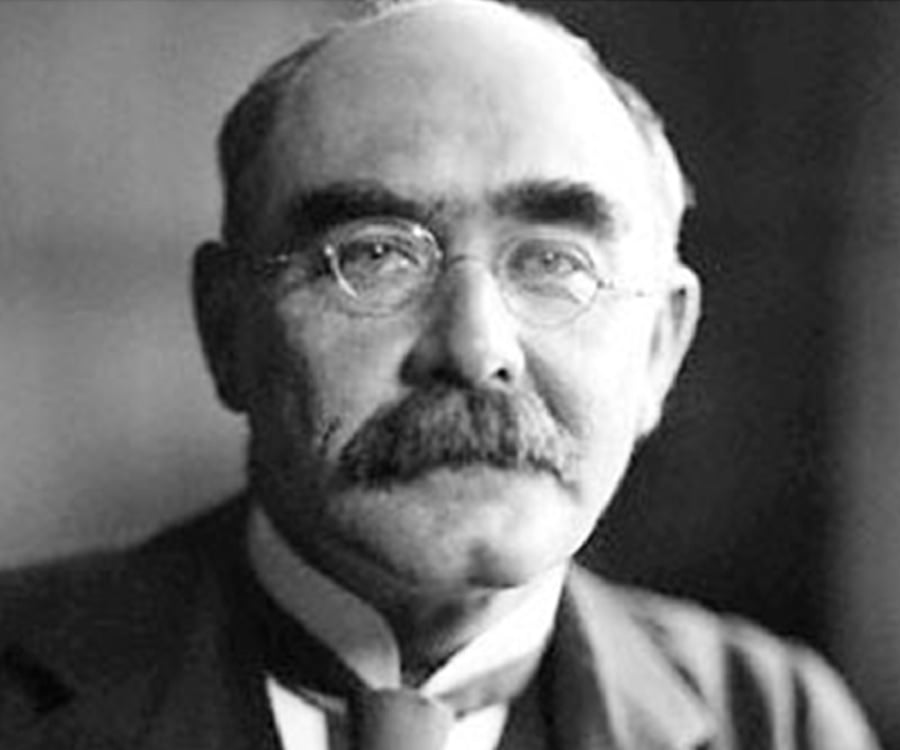
"The White Man's Burden" of civliising those who are "Half-devil and half child"

The bard of the British Empire wrote of civilising "your new-caught sullen peoples, Half devil and half child."

Rudyard Kipling

(Source: https://www.thefamouspeople.com/profiles/rudyard-kipling-40.php)

Posterity not only never forgives those who forget history, it decisively punishes them. 21st century 'New India' had better remember the old foundations on which it is building its Empire of the vanishing future. Recent writing on the economic and political history of the Raj has turned all but apologist. Here is an annoyingly interesting sample, worth the while of sensitive historians for critical intellectual attention.

These old foundations of the 'New India' were laid by a people who had wonderful bards to tell them imperial lies to hide the wars and genocides, the slavery and the plunder, by putting a fine, smiling face on the proceeds of organised bloodshed and conquest.

One such poet was the great Rudyard Kipling. This is what the wikipedia says about his poem:

"The White Man's Burden: The United States and the Philippine Islands" (1899), by Rudyard Kipling, is a poem about the Philippine–American War (1899–1902), in which he invites the United States to assume colonial control of that country.

"Originally, Kipling wrote the poem for the Diamond Jubilee celebration of Queen Victoria's reign (1837–1901), but it was exchanged for the poem "Recessional", also by Kipling. Later, he rewrote "The White Man's Burden" to address and encourage the American colonization of the Philippine Islands, a Pacific Ocean archipelago conquered from Imperial Spain, in the three-month Spanish–American War (1898).

"In the poem, Kipling exhorts the reader and the listener to embark upon the enterprise of empire, yet gives somber warning about the costs involved; nonetheless, American imperialists understood the phrase The white man's burden to justify imperialism as a noble enterprise of civilization, conceptually related to the American philosophy of Manifest Destiny."

Here is Kipling's (in)famous poem:


The White Man's Burden


TAKE up the White Man's burden -
Send forth the best ye breed -
Go bind your sons to exile
To serve your captives' need;
To wait in heavy harness
On fluttered folk and wild -
Your new-caught sullen peoples,
Half devil and half child.


Take up the White Man's burden -
In patience to abide
To veil the threat of terror
And check the show of pride;
By open speech and simple,
An hundred times made plain,
To seek another's profit,
And work another's gain.


Take up the White Man's burden -
The savage wars of peace -
Fill full the mouth of famine
And bid the sickness cease;
And when your goal is nearest
The end for others sought,
Watch Sloth and heathen Folly
Bring all your hopes to nought.


Take up the White Man's burden -
No tawdry rule of kings,
But toil of serf and sweeper -
The tale of common things.
The ports ye shall not enter,
The roads ye shall not tread,
Go make them with your living,
And mark them with your dead !


Take up the White Man's burden -
And reap his old reward,
The blame of those ye better,
The hate of those ye guard -
The cry of hosts ye humour
(Ah slowly !) towards the light:-
"Why brought ye us from bondage,
"Our loved Egyptian night ?"


Take up the White Man's burden -
Ye dare not stoop to less -
Nor call too loud on Freedom
To cloak your weariness;
By all ye cry or whisper,
By all ye leave or do,
The silent sullen peoples
Shall weigh your Gods and you.


Take up the White Man's burden -
Have done with childish days -
The lightly proffered laurel,
The easy, ungrudged praise.
Comes now, to search your manhood
Through all the thankless years,
Cold-edged with dear-bought wisdom,
The judgement of your peers.


Sunday, September 2, 2018

A prelude to 'Brown Skin, White Masks' ?

Dear Devi-kulis,

Sending you something (brief) to read...to inaugurate the new blog!

Devikecharansparsh,
aseem


You have sometimes heard me say that we await the day when an Indian will pluck up the courage to write an equivalent of Frantz Fanon's 'Black Skin, White Masks'...something like a post-Macaulay 'Brown Skin, White Masks', a book that tells the unbearable truth about how 'Modern Indians' experience race, colour, language, class, and gender.

You have also often heard me use the expression "Know your white man!" I should add another to it: "Know your white woman, too!"

​What I am sharing​ is a classic dialogue well worth reading, esp for those residing or for those who have lived at some point in God's country...​and as much for those wishing to reside in it !​

www.brainpickings.org/2015/03/19/a-rap-on-race

I met James Baldwin in my first months in America in 1987, just before he died. He had come to Boston when I was studying there. Very gentle man, with a wry sense of humour.

To me, this dialogue between a huge name in anthropology with an African-American writer always demonstrated rather starkly how differently a black man (or woman) thinks about the world, compared to a white woman (or man).

For instance, they exchange this:

MEAD: Did you bomb those little girls in Birmingham?

BALDWIN: I’m responsible for it. I didn’t stop it.

MEAD: Why are you responsible? Didn’t you try to stop it? Hadn’t you been working?

BALDWIN: It doesn’t make any difference what one’s tried.

MEAD: Of course it makes a difference what one’s tried.

BALDWIN: No, not really.

MEAD: This is the fundamental difference. You are talking like a member of the Russian Orthodox Church… “We are all guilty. Because some man suffers, we are all murderers.”

BALDWIN: No, no, no. We are all responsible.

MEAD: Look, you are not responsible.

BALDWIN: That blood is also on my hands.

MEAD: Why?

BALDWIN: Because I didn’t stop it.

MEAD: Is the blood of somebody who is dying in Burma today on your hands?

BALDWIN: Yes, yes.

MEAD: Because you didn’t stop that? That’s what I mean by the Russian Orthodox position, that all of us are guilty of all that has been done or thought —

BALDWIN: Yes.

MEAD: And I will not accept it. I will not.

BALDWIN: “For whom the bell tolls.” … It means everybody’s suffering is mine.

MEAD: Everybody’s suffering is mine but not everybody’s murdering, and that is a very different point. I would accept everybody’s sufferings. I do not distinguish for one moment whether my child is in danger or a child in Central Asia. But I will not accept responsibility for what other people do because I happen to belong to that nation or that race or that religion. I do not believe in guilt by association.

BALDWIN: But, Margaret, I have to accept it. I have to accept it because I am a black man in the world and I am not only in America… I have a green passport and I am an American citizen, and the crimes of this Republic, whether or not I am guilty of them, I am responsible for.

MEAD: But you see, I think there is a difference. I am glad I am an American because I think we can do more harm than any other country on this earth at the moment, so I would rather be inside the country that could do the most harm.

BALDWIN: In the eye of the hurricane.

MEAD: In the eye of the hurricane, because I think I may be able to do more good there.

Swaagat !

Dear Devi-kulis,

Devi-kul blogspot par aap sab ka haardik swaagat hai !

Aryaman has very kindly created this blog for us to communicate with each other through. Please make regular use of this facility to speak to each other about matters of shared concern - the sort we talk about at Kuldip's Dhaba on AU campus, when the opportunity avails.

Devikecharansparsh,

aseem